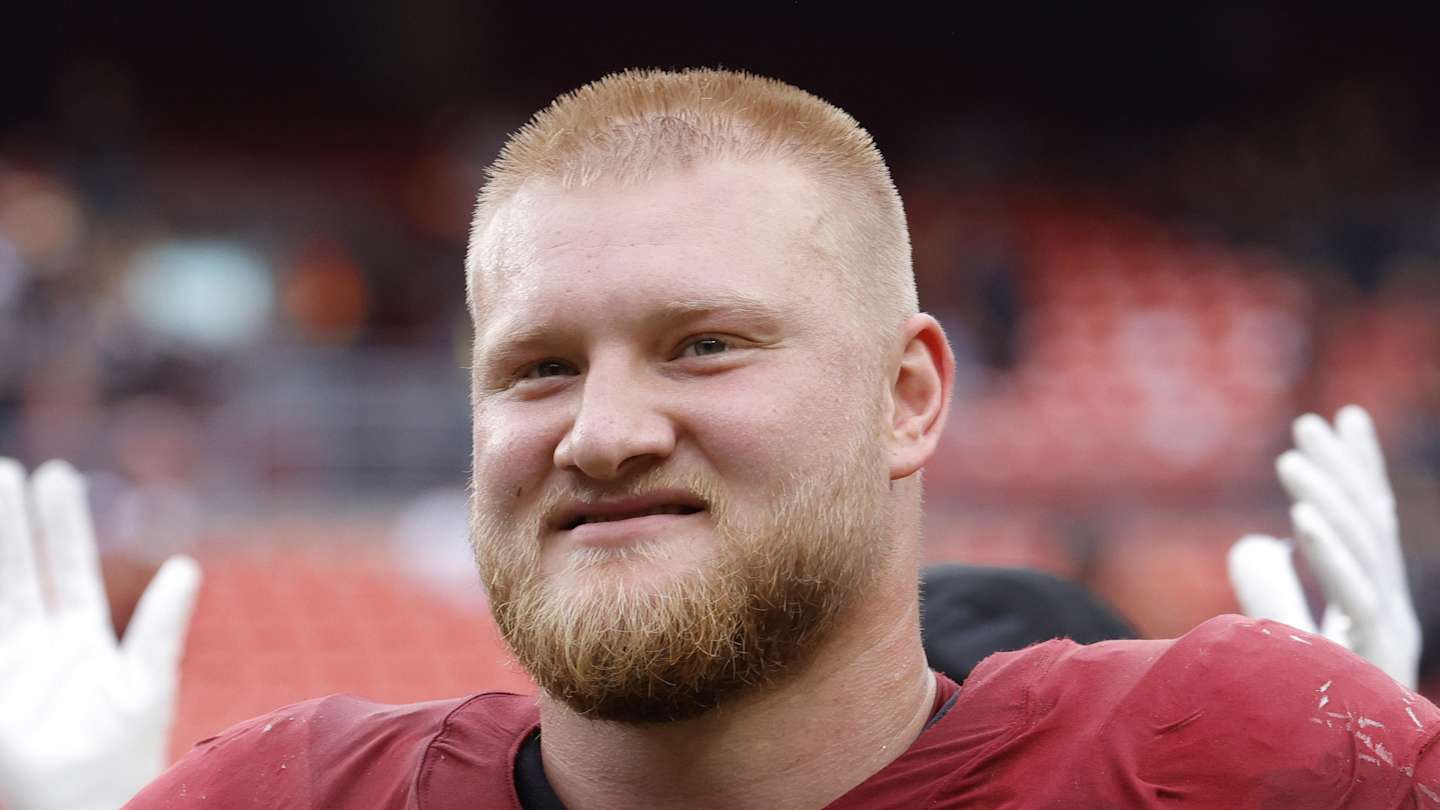
The Commanders' Tough Call: Unpacking the Tyler Biadasz Release
In a move that sent ripples through the NFL landscape, the Washington Commanders made the difficult decision to release starting center Tyler Biadasz. The news, initially reported by NFL Network insider Ian Rapoport, signaled a significant overhaul for the Commanders' offensive line as they head into a new era. For Washington fans, it marked the departure of a respected veteran, while for the rest of the league, it immediately made a top-tier center available in free agency.
At 28 years old, Biadasz had been a consistent presence, starting 31 games over the past two seasons and proving himself a reliable anchor in the middle of the line. The primary driver behind the Commanders' decision, however, appears to be financial. Biadasz carried a substantial cap hit of nearly $11 million for the upcoming season. By releasing him ahead of the new league year, Washington managed to save a crucial $2.8 million in cap space. This financial flexibility is paramount for a team undergoing a significant roster reconstruction under new General Manager Adam Peters and Head Coach Dan Quinn, allowing them to pursue other key free agents or allocate funds elsewhere on the roster. It's a stark reminder of the business side of professional football, where even valuable contributors can become cap casualties.
A Void in Leadership: Jayden Daniels' Perspective and the Communication Gap
While the financial savings are undeniable, the human and on-field costs of losing Tyler Biadasz for the Commanders, particularly for their future franchise quarterback, are significant. Rookie quarterback Jayden Daniels, who would ideally have benefited from Biadasz's veteran presence, had previously spoken glowingly about their relationship. "Anything I ever needed, man, Tyler is always there, always checking up on me," Daniels remarked in 2024, highlighting the deep bond they were forging both on and off the field. This relationship extended beyond camaraderie; it was fundamental to the on-field success of the offense.
Daniels emphasized the critical role of communication between the quarterback and center, stating, "Communication. I mean, that's the biggest thing. That's what we preach on the offensive side of the ball, especially the quarterback, center and running backs because we all got to communicate where we're going, what we're doing. I'm going to be on the same page." For a young quarterback navigating the complexities of an NFL offense, a veteran center acts as an extension of the coaching staff on the field. They handle protection calls, identify defensive fronts, and ensure the entire offensive line is working in unison. Losing Biadasz means Daniels, or whoever takes the helm, will now need to build that crucial rapport from scratch with a new player, adding another layer of challenge to an already demanding role. The intangible value of consistent communication and leadership, especially for a developing signal-caller, is immense and often underestimated when weighed against pure cap savings.
Practical Tip for Young QBs and New Centers: Establishing immediate trust and communication is paramount. Teams should prioritize joint film sessions, extra practice reps focused on snap counts and protection adjustments, and even off-field team-building activities to accelerate this crucial bond. The quicker a new center can become the "eyes and ears" for the quarterback, the smoother the transition will be for the entire offense.
Washington's Next Move: Filling the Big Shoes at Center
With Tyler Biadasz now departed, the Washington Commanders face a critical decision regarding their starting center position. The question looms: Will they seek a replacement through free agency or the upcoming NFL Draft? Both avenues present distinct advantages and challenges. Free agency offers the chance to acquire a proven veteran with existing NFL experience, potentially providing a more immediate plug-and-play solution. However, the market for starting-caliber centers can be competitive, and signing one might eat into the cap savings gained from releasing Biadasz. On the other hand, the draft allows the Commanders to develop a younger player within their system, potentially finding a long-term anchor at a lower cost, but it comes with the inherent risk of an unproven commodity and a longer development curve.
The urgency to find the right fit is amplified by the new offensive scheme David Blough is looking to incorporate next season. The new center will not only need to excel physically but also quickly grasp the intricacies of the playbook and seamlessly integrate with the rest of the offensive line, particularly in fostering that vital communication with Jayden Daniels. This period is crucial for the Commanders, as many members of their coaching staff and front office were recently in Indianapolis, intensely scouting and interviewing prospects at the annual Scouting Combine inside Lucas Oil Stadium. This scouting effort signals a strong possibility of addressing the center position through the draft, though the team will also be monitoring the free agent market closely once the new league year officially begins on March 9. Regardless of the path chosen, the player tasked with replacing Biadasz will have significant shoes to fill, both in terms of on-field performance and leadership in the locker room. The pressure is on the Commanders' front office to make the right move to stabilize the interior of their offensive line and support their quarterback. For a deeper look into the ramifications for both teams, explore Tyler Biadasz's Impact: From Commanders Loss to Chargers Gain.
A Perfect Fit: Tyler Biadasz Joins the Los Angeles Chargers
While the Commanders wrestled with their cap and roster decisions, Tyler Biadasz quickly found a new home, signing a multi-year deal with the Los Angeles Chargers. This swift action by Chargers General Manager Joe Hortiz and his staff proved to be a shrewd move, immediately solidifying a crucial position on their offensive line that had recently seen the retirement of veteran Bradley Bozeman. The Chargers were among several teams actively seeking a starting center, and securing Biadasz, a top-tier talent, was a significant win for the organization.
For Biadasz, the move to Los Angeles was described as a "perfect match" from the outset. He expressed enthusiasm for the opportunity and the coaching staff, telling Chargers.com, "It was a combination of the opportunity and what it presented with the coaching staff." Beyond the schematic fit, Biadasz also highlighted existing relationships with potential teammates: "Also the players I've known throughout my time in the league and have great relationships with them off the field in regards to some of the O-Linemen, being able to work with them throughout the years off the field." This existing rapport can significantly smooth the transition and accelerate team chemistry. He added, "So blessed and honored to be here with the L.A. Chargers and continue my career and continue to compete for a championship. Not only that, but do it with these coaches that have the personality types and energy, passion and desire to win."
Biadasz brings more than just experience and a positive attitude; he brings elite performance. According to Pro Football Focus (PFF), Biadasz delivered an overall grade of 71.5 in the 2025 regular season, ranking him ninth among all centers with at least 800 snaps. His pass-blocking grade of 67.1 also placed him ninth in that group, while his run-blocking grade of 71.2 was eleventh. These metrics paint a clear picture: Biadasz was a Top 10 center last season, consistently performing at a high level. His durability is another significant asset, having been incredibly reliable since becoming a full-time starter in 2021. This combination of top-tier performance, durability, and leadership makes him an immediate and significant upgrade for the Chargers' offensive line. To delve deeper into his impressive PFF grades and what makes him a top-tier center, read more at Chargers Secure Top 10 Center Tyler Biadasz: PFF Grades Revealed.
The NFL is a relentless business, often forcing teams to make difficult choices that balance financial prudence with on-field performance and team chemistry. The release of Tyler Biadasz by the Washington Commanders epitomizes this reality, securing valuable cap savings but creating a significant void in leadership and communication for their developing quarterback. Meanwhile, his immediate signing by the Los Angeles Chargers highlights how quickly one team's necessary sacrifice can become another's strategic gain. Biadasz brings not only his proven Top 10 performance and durability but also invaluable veteran leadership and pre-existing relationships to a Chargers team eager to solidify its offensive front. As both franchises move forward, the impact of this personnel decision will undoubtedly be a storyline to watch, shaping the offensive lines and futures of two distinct NFL teams.